term “non-physician practitioner” when referring to advanced practice clinicians. Being described as something you are not, rather than what you so brilliantly are, is disappointing. Without considering individual scopes of practice, professional midwifery care should not merit elevated status. In DEA jargon, this is a designation strictly intended for doctors.

unsplash-image
Within government programs, “mid-level providers” are intended to exist, positioned dead center, within the complex vertical hierarchies of hospital healthcare. Physician care is on top, with descending levels supposedly representing less-than-optimal care. Nurse-midwives and other advanced practice professionals often find themselves occupying the undeserved “mid” position in this healthcare status layer cake. CNMs, however, are in excellent company. Contrary to the obvious implications created by this objectionable designation, nurse-midwives, nurse anesthetists, nurse practitioners in all specialties, and physician assistants individually practice at the highest levels of their respective scopes of practice. Advanced practice nursing professionals and PAs are licensed independently, and their personal standards of practice were never “designed to be dependent on or an extension of care rendered by a physician.[2]

A Term That Needs to Be Eradicated
Legitimacy issues already plague the profession of certified nurse-midwifery. Along with frightening historical misconceptions, CNMs do not need the added burden of a label that insinuates delivery of mediocre care. Defining any segment of healthcare this way begs this question: “Can you contemplate anything associated with ‘middle’ that is a desirable state of being?” Consider these words and phrases: middle-of-the-road, mid-life crisis, middle of a tax audit, mid-way, midriff, middling, middle child syndrome, middle schoolers (!), middle of nowhere, middle finger . . . The antonym for “middle”? Distinctive, Special, Unique. Ouch.
Outdated Hierarchies of Care Serve Only Those At the Top
Physician-dominant hierarchies of care, encouraged by for-profit hospital corporations and government healthcare entities, have contributed little to the advancement and wisdom of cooperative healthcare teams. Vertical hierarchies often overlook patients' unique needs and are consistently found in hospitals that have perpetuated unhealthy care cultures.
Exclusive hierarchies in patient care can also encourage an increasingly inadequate and restrictive delivery of care. Competent and well-educated providers from diverse educational backgrounds should not have to endure corporate discrimination based on the notion that only medical school education can ensure the very best level of care. Finally, if mid-level providers actually do exist, which providers do we identify as low-level?
unsplash-image
It gets worse. With the participation of “mid-level” providers: legislatures, hospital staff bylaws, Medicare, Medicaid, and other entities, support laws requiring direct “Supervision”. It is automatically assumed that “mid-levels” must be supervised by those who are designated as “high levels.
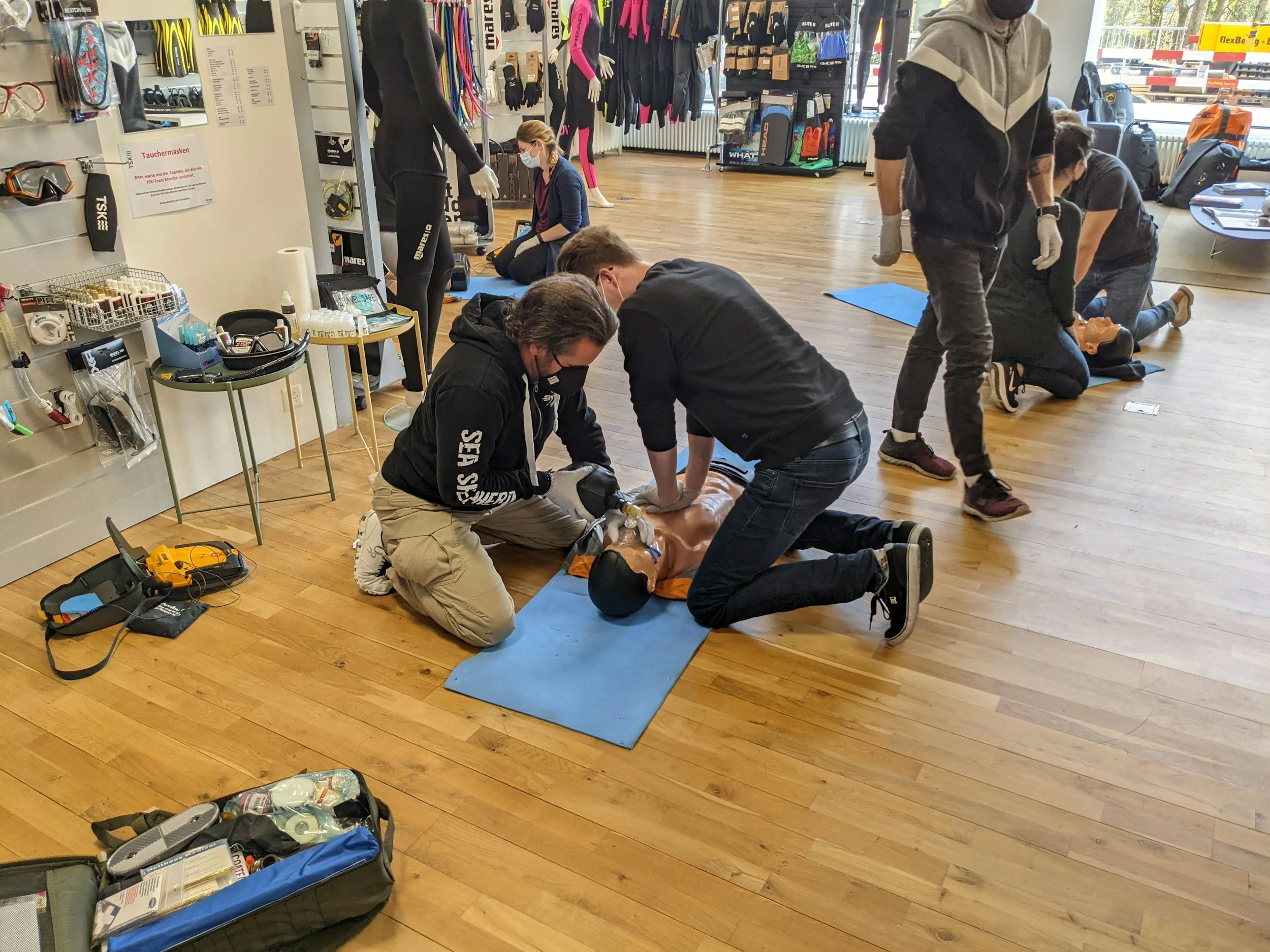
Legislation addressing the dangers of mid-levels can be found in Statutes and medical staff bylaws. Of interest, supervisory requirements are never explicitly defined. Physicians can become deeply alarmed, to the point of requiring chest compressions, when there is a hospital/clinic directive to supervise mid-level providers.
Panic predictably sets in when individual scopes of practice are misunderstood or misinterpreted. In the case of certified nurse-midwives, full practice authority is maintained within a well-defined scope of practice (See ACNM Standards for the Practice of Certified Nurse-Midwifery). In more than half of the States, advanced healthcare providers can practice independently under State law. States passing full practice authority are increasing.[3]
When care decisions require expertise beyond the scope of CNM practice, the process involves physician consultation and/or collaboration, not supervision. In select circumstances, total transfer of care is appropriate. More frequently, physicians and midwives have successfully co-managed patients with acute care needs.
Use and Abuse
After years of bias and avoidance, healthcare corporations and independent physicians are finding ways to use CNMs/CMs for purely economic purposes. Hospitals are considering ways to use potentially dangerous mid-levels to accommodate more patients in a day’s clinic schedule. But this is not the problem. Of course, CNMs/APNs/PAs can competently attend to patients in a busy clinical/hospital clinic, increasing the number of individuals who can be seen and billed.
When unable to find independent specialty jobs, except in rugged or remote places, advanced practice providers may be vulnerable to being lured into a hospital corporate fold. In a busy specialty practice, advanced practice providers can care for patients of the same types as doctors. The problem is that they are not being paid commensurate with their responsibilities and the increasingly acute patient load.
For some nurse-midwives, this situation may also provoke professional identity issues because the patient populations they are being recruited to care for are increasingly remote from the norm. It is not surprising, in these settings, that CNMs/CMs will complete the work and still deliver care as midwives, at least to the extent that they can in very high-risk care situations.
Will these realities eventually require a new iteration of midwifery that requires changes in, or abandonment of, an accurate midwifery model of care? Will a midwifery philosophy of care remain relevant when treating patients at higher risk? CNMs/CMs possess the education, knowledge, and skills necessary to provide select higher-risk levels of care in collaborative environments. The question is, how might it change the practice of certified nurse-midwifery and certified midwifery, if at all?
1. J Adv Pract Oncol. 2012 Sept-Oct; 3(5): 287-288.
2. American Association of NURSE PRACTITIONERS. Stanik-Hutt, J., Newhouse, R.P., White, K.M. (2013). The quality and effectiveness of care provided by nurse-practitioners. Journal for Nurse-Practitioners, 9(8), 492-513.
3. AAP News. Letter to the Editor: Term ‘mid-level provider’ outdated, offensive. May 24, 2016.
* When receiving hospital communications using the term, midlevel, it can be personally satisfying to respond, explaining how insulting the term is to you, as a professional, and requesting that they stop referring to your career in this disrespectful way.
** The word, Midwife, comes from Old English, meaning "with“(mid) “wife”(woman). No present or historical associations with “middle” or “mid-level”.
Relevance For Practice

Finding Dan: Another day in a rural prenatal clinic
Situation:
As a clinician, the use of derogatory terms in your workplace helps you assess the culture of care. Unhealthy care cultures exhibit insensitivity to non-physician professionals, such as a lack of cooperation and respect from physician and nursing colleagues alike. Nurse-midwifery remains a controversial aspect of legitimate healthcare due to decades of historical myths and misconceptions. Corporate healthcare has not done much to elevate the profile of nurse-midwifery. Hospital administrators will elevate the physician staff, recognizing them as the primary revenue generators, and will consistently cater to this reality. Midwifery garners far less regard. As a result, midwives in specific hospital systems are susceptible to decreased morale, decreased performance, and career burnout.[4]
Vulnerability:
Along with fatigue and burnout, hospital-based midwives may exhibit anxiety, depression, and frustration. Despite love for their work, midwives are leaving hospital practice and abandoning midwifery altogether. Corporate healthcare systems may not be relied upon for moral or financial support, especially in the wake of an unexpected, unplanned birth. Hospital administrations and physician staff may be quick to assume midwife culpability, and risk management might appear to expect a mistake. Despite training and education to function at the highest levels within their scope of practice, CNMs/CMs exposed to an atmosphere of distrust and disrespect can only experience so much without emotionally faltering under the pressure. Furthermore, disdain and animosity from labor/delivery and nursery/NICU staff can add to workplace pressures.[5]
Risk Assessment/Duty:
Following the ACNM standards of practice and the supporting documents decreases the chances that you will be involved in a lawsuit. If you have not yet figured it out, CNMs/CMs have a lot to prove. It may seem unfair that you are subject to greater scrutiny than your colleagues. In maternal-child practice, midwifery is the specialty that has the most to offer, and also the most to lose, due to society’s misconceived notions and collegial distrust. To overcome this, you must strive to be fully present in your work amid professional, family, and institutional pressures. This also involves a willingness to ask for help. In hostile work environments, this might feel impossible, but your patients’ needs must take precedence over your fears and discomfort.
Duty to your patients is implicit in midwifery care. If there is any other duty to be considered, here, it is to perform well, educate colleagues when you can, and strive to raise expectations at every opportunity.
4. Open Access Maced J Med Sci 2018 Nov 25; 6(11): 2228-2232
5. Erin M. Wright, CNM, DNP, et.al. Midwifery Professional Stress and Its Sources: A Mixed-Methods Study. Journal of Midwifery and Women’s Health. Vol 63, No. 6, November/December 2018
http://www.midwivesontrial.com/articles/mid-level-mortification