
Safeguarding modern midwifery

About the Author

Uniting clinical expertise and legal perspective to reveal how midwifery is interpreted—and often misinterpreted—across courts and hospitals.

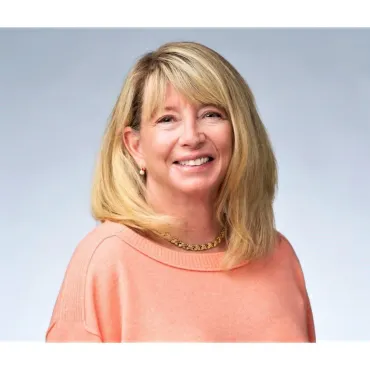
Martha E Merrill-Hall portrait
Martha E Merrill-Hall JD MS CNM

Martha has led CNM practice across private, Indian Health Service, hospitalist, and critical access settings while litigating personal injury and professional malpractice cases.

Today she researches verdict trends, policy shifts, and licensure actions from the Rocky Mountains—equipping midwives, patients, and counsel with grounded legal insight.

Back to About

Why midwives & counsel read

Dual license perspective

Decades of private, IHS, hospitalist, and critical access CNM practice pair with JD work representing both plaintiffs and defendants in professional malpractice.

  • Pro bono defense of advanced practice providers facing board actions.
  • Expert witness experience in midwifery negligence claims.

Where I've practiced

Licensed across Colorado, Montana, Nebraska, Iowa, New Mexico, California, and beyond—spanning CNM hospitalist teams, Indian Health Service care, and cardiology/critical care nursing roots in Vermont and Maine.

Today I research verdicts, legal seminars, and policy shifts from the Rocky Mountains.

What Martha hopes readers gain

  • Historical context for how CNMs/CMs secured hospital privileges and where culture still lags clinical reality.
  • Plain-language breakdowns of licensure boundaries, malpractice myths, and courtroom expectations.
  • Validation for midwives, attorneys, and patients who need equitable framing of the profession’s contributions.
  • Strategies to translate courtroom narratives back into safe bedside practice.

March 3, 2025

Cheating On Call Part 2

Updated January 12, 2026

Better the Call Room Than the Courtroom

            Midwives: Once again, call time is not your personal time.  This select time frame includes patients who may need in-person care and advice. Call time, temporarily, should take precedence over your family, an infant, a toddler, your partner, or your much-needed rest. I acknowledge that this responsibility is challenging.

Rosalie Lyons  unspl img
Photo by Rosalie Lyons

On Call and Nursing Infants

Moms On Call At the Hospital    unspl img
Photo by Moms

The majority of maternal on-call care providers are women: midwives, physicians, nurse practitioners, and others. It is an unfortunate reality that providers who are mothers will experience emotional and practical difficulty, on call, to a greater extent than their male counterparts. There is nothing quite as lonely and uncomfortable as pumping breast milk in a freezing cold hospital call room at three o’clock in the morning.

Professional women are, understandably, torn between their duty to patients and family, and, especially, their need to be available to their nursing infants.  In the old days, one needed to sequester to collect breast milk, as it required privacy and a reluctance to reveal oneself while performing the task.

This may be considered small comfort, but breast pumps have evolved, and the process can now be accomplished discreetly, under clothing, while you interact with co-workers, make rounds, or even deliver a baby.

I am not suggesting that it is no longer hard to be away from a nursing infant, but collecting milk is, currently, more civilized and less isolating than it once was. I understand that it’s still inconvenient to be away from home. Having spent my share of time in the call room, away from several infants, I can attest that the long nights on call will eventually fade from your memory. Poor choices on call, which result in harm to a mother or baby in your care, will remain with you forever.